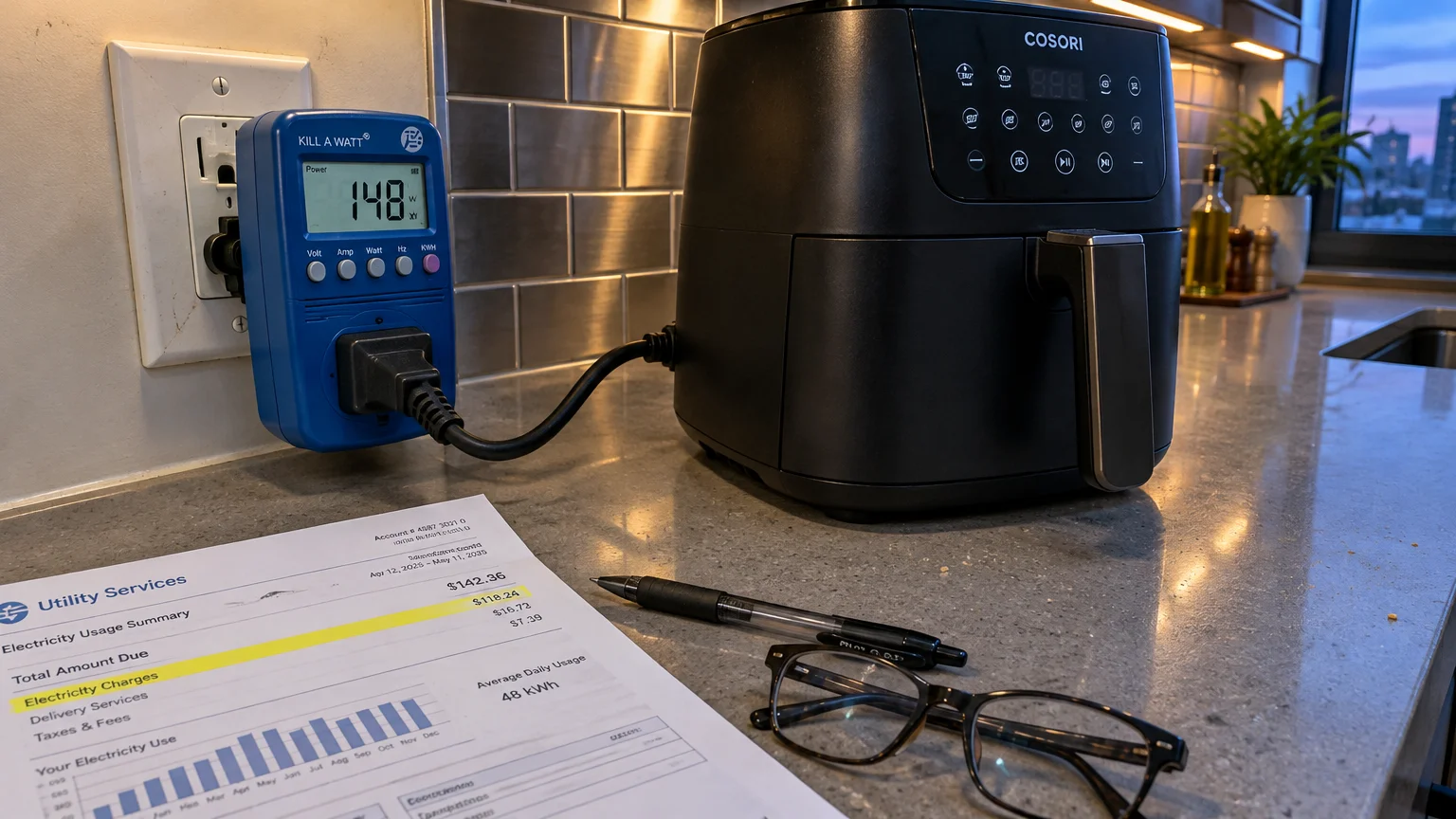
You can slash your utility costs without freezing in the dark or giving up your favorite modern comforts. Everyday countertop gadgets silently siphon power from your wall outlets day and night.
In fact, unmonitored plug loads quietly inflate everyday living expenses across the country. Understanding exactly how these compact machines draw electricity gives you an immediate financial edge.
Here is how to track down the secret energy drains in your living space and eliminate waste immediately. Stop handing your hard-earned cash to your local utility company every single billing cycle.
Tip #1: Tame the Space Heater Trap
Portable space heaters represent one of the most deceptive energy drains in any home. Many people run them to avoid turning up the central furnace, expecting dramatic savings.
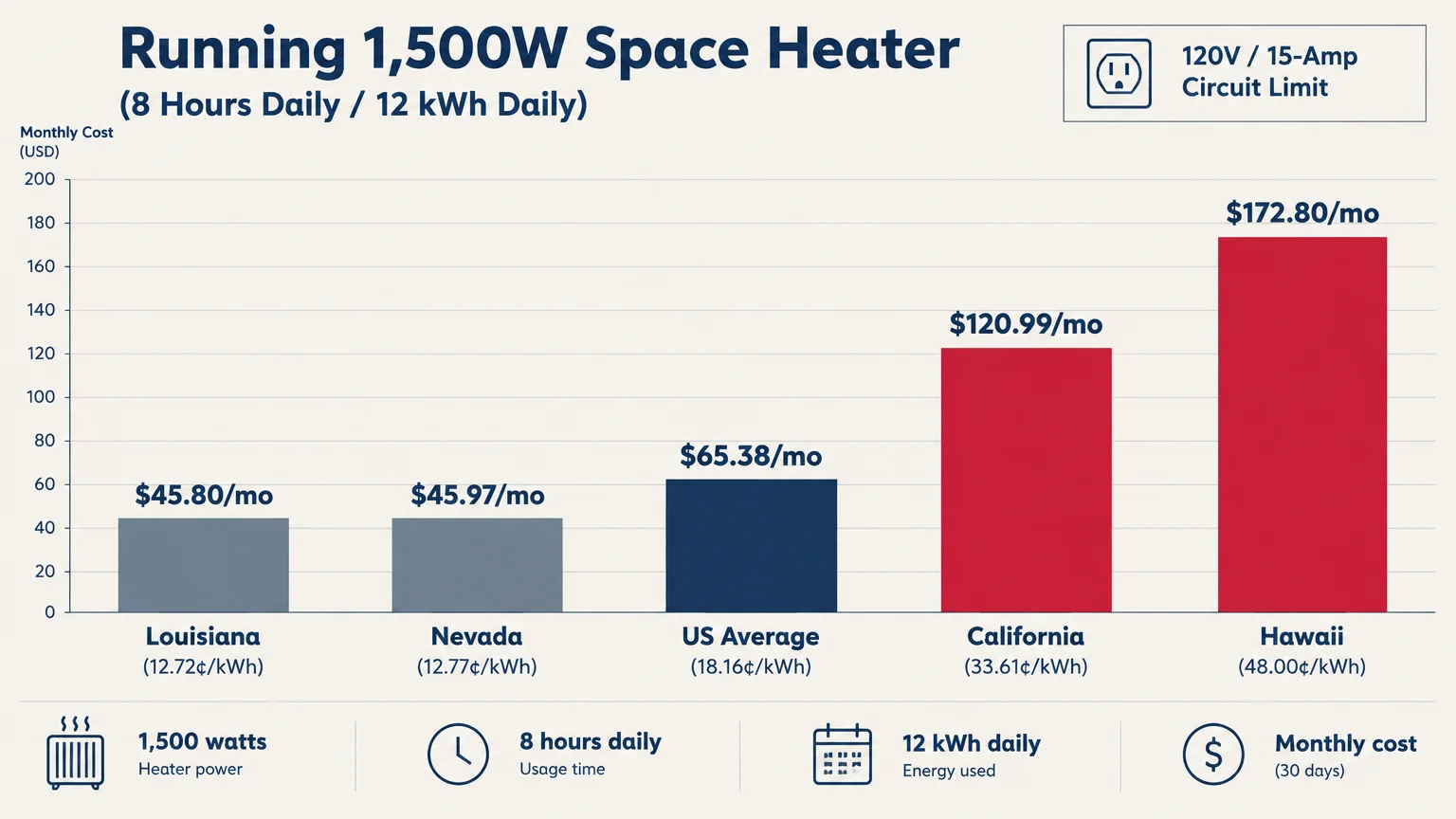
Unfortunately, standard portable electric space heaters run at 750 watts on low and 1,500 watts on high. That top setting hits the maximum continuous load allowed on a standard 120-volt, 15-amp household circuit.
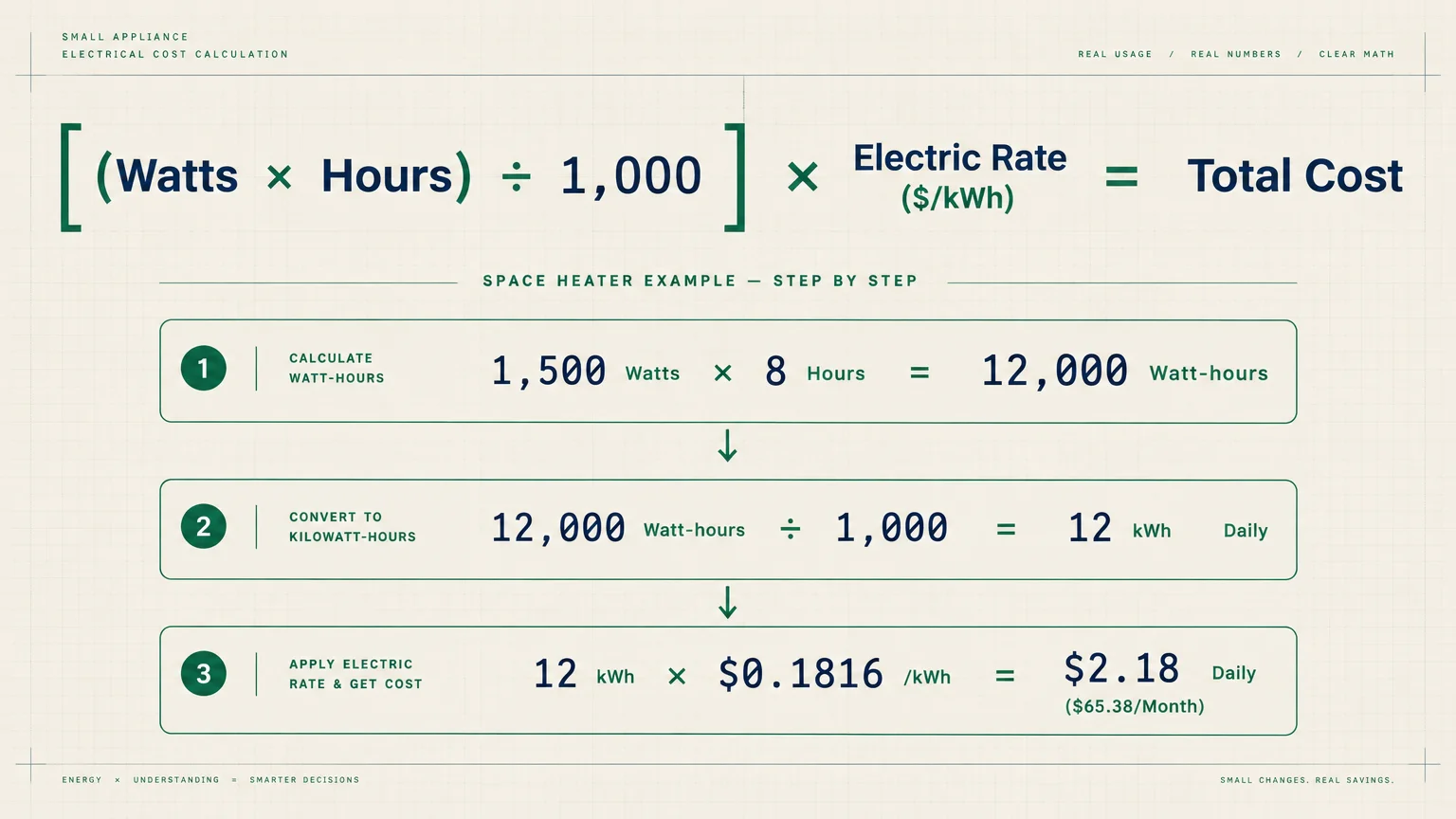
Running a single 1,500-watt space heater for eight hours daily consumes 12 kilowatt-hours of electricity. At the national average residential electricity rate of 18.16 cents per kilowatt-hour, that habit costs $2.18 per day.
Over a full month, that single heater adds approximately $65 to your power bill. If you run two units simultaneously, you double that penalty instantly.
Location makes this financial damage even more severe. While residents in Louisiana pay 12.72 cents per kilowatt-hour and Nevada pays 12.77 cents, other regions face crushing rates.
If you live in California, where electricity averages 33.61 cents per kilowatt-hour, running that heater costs over $120 monthly. In Hawaii, where rates hit 48.00 cents per kilowatt-hour, the cost exceeds $172 each month.
Many consumers also fail to realize that inexpensive space heaters lack precise digital temperature sensors. Mechanical bimetallic thermostats often drift, causing the 1,500-watt heating coils to run far longer than necessary.
If you must use portable heat, pair your unit with an external plug-in digital thermostat. This upgrade keeps room temperatures steady without allowing the heater to pull maximum current indefinitely.
You can stop this drain by treating space heaters as targeted, temporary tools rather than continuous background heat. Heat the person rather than the entire room with heated mattress pads or focused lap blankets.
Always purchase space heaters equipped with digital thermostats and automatic shutoff timers. Never let a space heater run unattended in an empty room or while you sleep.
Lowering your central thermostat while running multiple portable heaters almost always backfires. Stick to efficient zone management and close off unheated spaces to protect your budget.
Tip #2: Eliminate Phantom Energy with Smart Power Strips
Most consumers assume that switching off a device completely cuts its electrical consumption. In reality, plugged-in electronics continually pull electricity in standby mode, creating phantom energy.
According to the Department of Energy, standby power accounts for 5% to 10% of a typical household’s total residential electricity use. That invisible leak occurs continuously, every hour of the year.
This phantom load costs the average American household between $100 and $200 per year. Official estimates from energy agencies place the average upper bound around $183 annually.
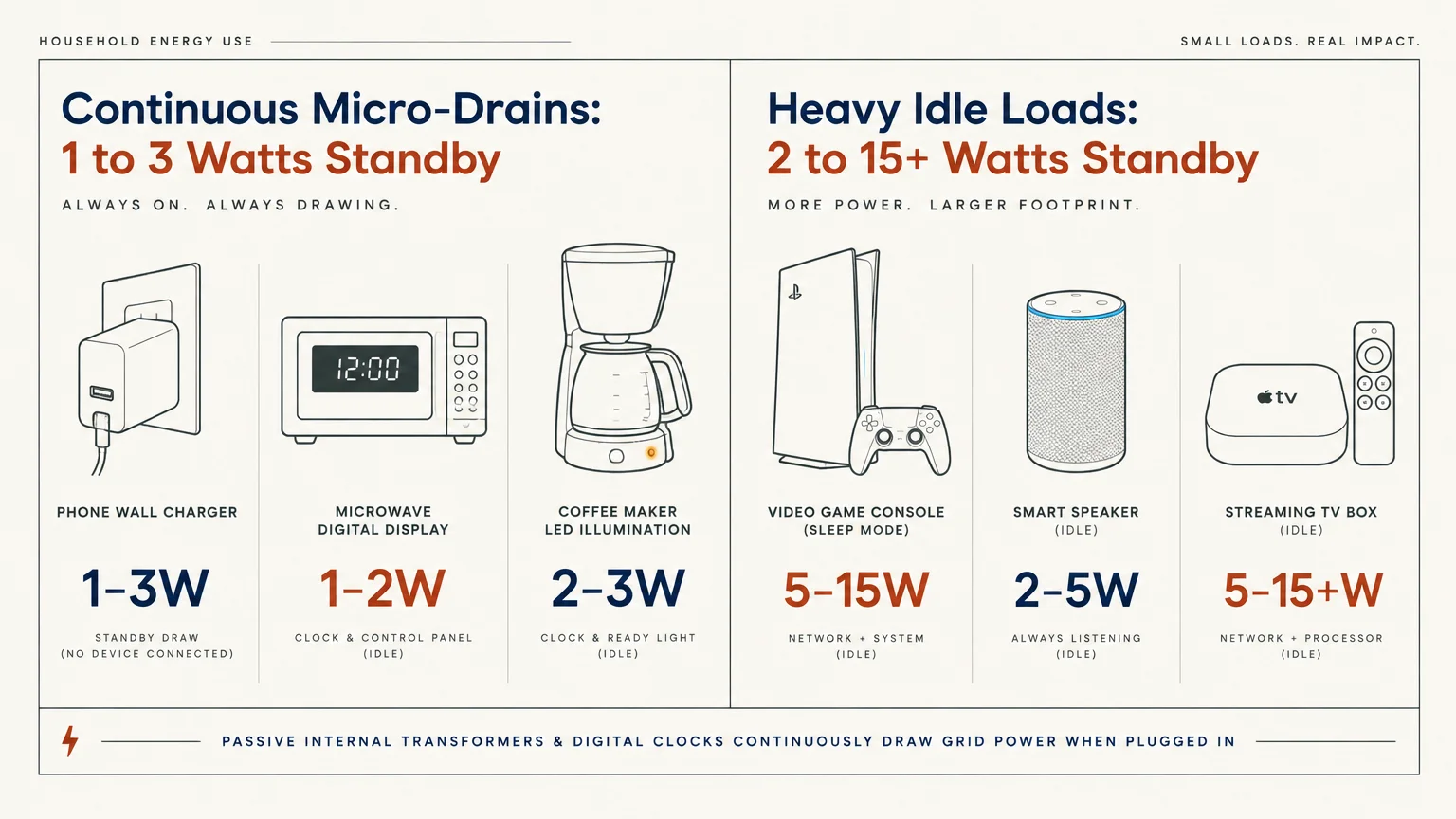
Small appliances and countertop electronics steadily sip power behind your back. Microwaves, coffee makers with digital displays, and idle chargers typically draw 1 to 3 watts around the clock.
Meanwhile, computers, smart speakers, streaming boxes, and gaming consoles draw 2 to 15 watts or more while idle. Over hundreds of hours, those trickle charges quietly erode your monthly budget.
Vampire loads also generate unnecessary ambient heat inside modern electronics. This continuous thermal stress degrades sensitive capacitors and microchips prematurely over several years of use.
Cutting standby power does more than trim your electric bill. It protects your expensive hardware from premature component failure caused by constant low-level electrical operation.
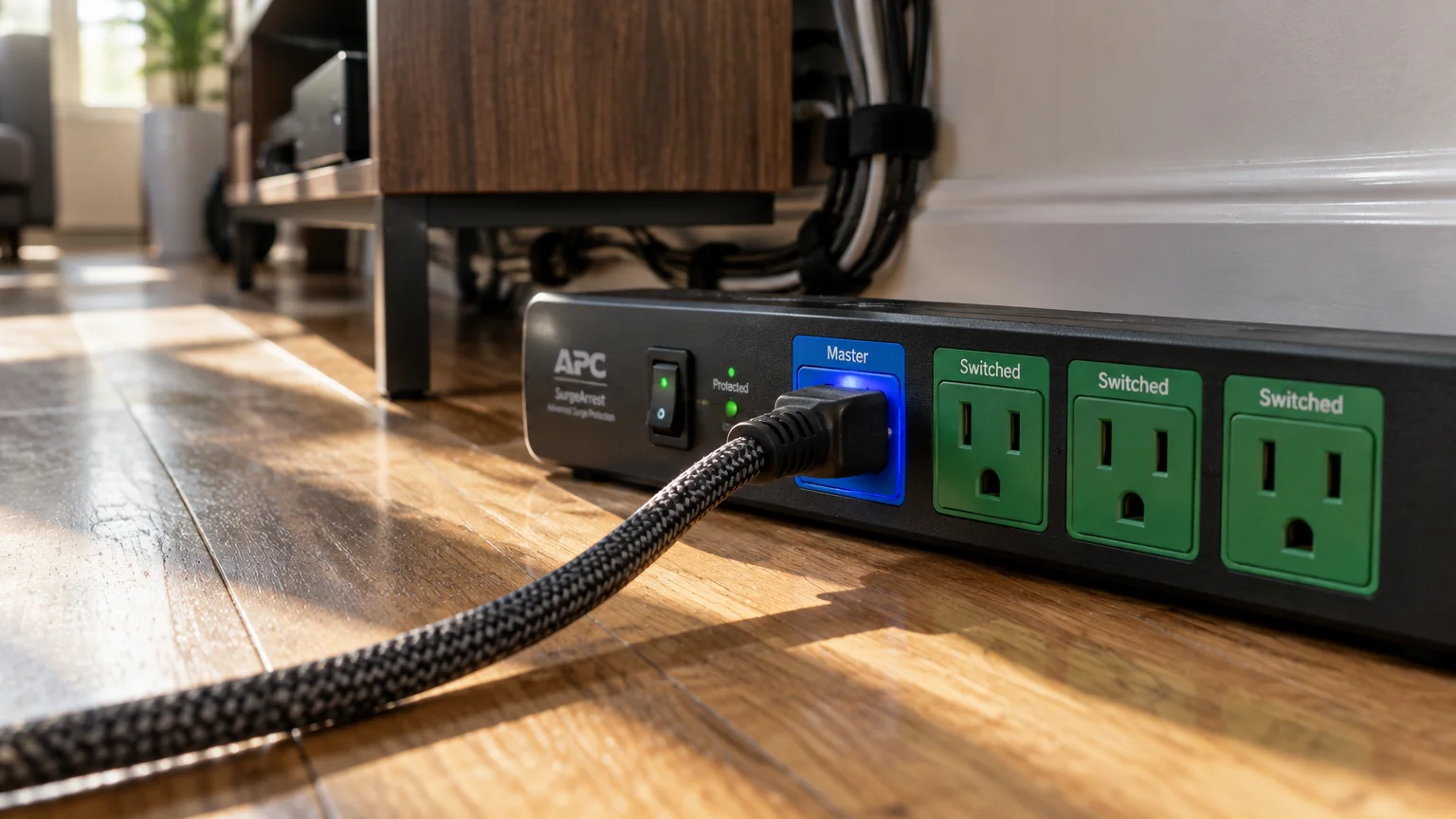
You can crush phantom loads without constantly yanking cords from behind heavy furniture. Smart power strips solve this problem automatically by severing current to idle accessory outlets.
These power strips feature a primary control outlet alongside secondary switched outlets. When you shut off the master device, the strip instantly cuts electricity to all connected peripheral accessories.
Alternatively, you can install inexpensive surge protectors equipped with simple manual rocker switches. Flipping one single switch before leaving the house eliminates dozens of active standby drains simultaneously.
Treating standby power as a real utility expense will change how you set up every room. Take ten minutes to group related electronics onto switchable strips today.
Tip #3: Audit Your Countertop Cooking Appliances
Countertop cooking gadgets promise speed and convenience, but their heating elements require serious electrical current. Understanding their power draw lets you cook smarter without inflating your monthly statement.
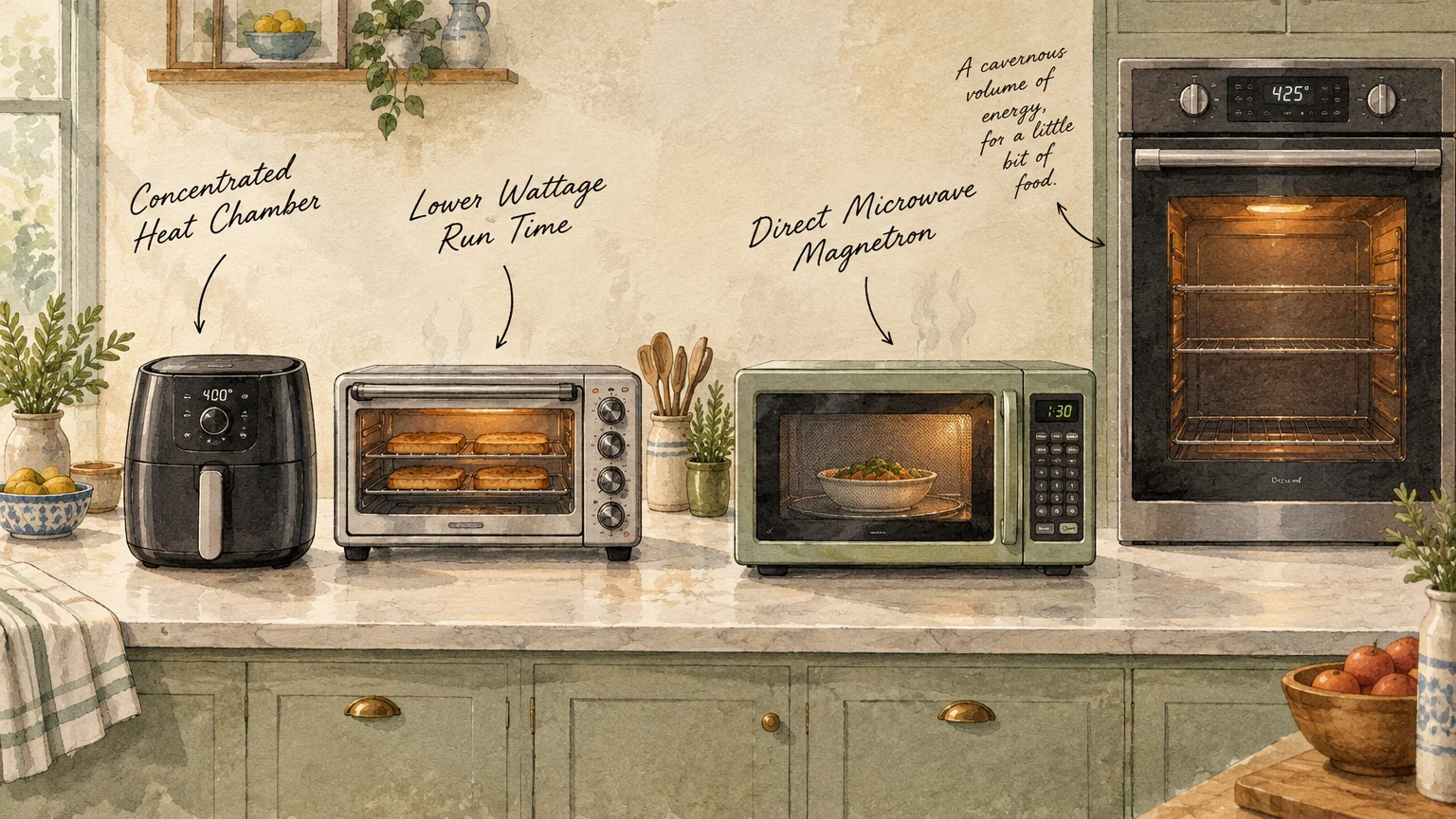
Standard microwave ovens consume between 600 and 1,200 watts during active cooking cycles. Meanwhile, high-heat countertop devices like air fryers, toaster ovens, and electric kettles pull 1,200 to 2,200 watts.
Because kitchen appliances run for relatively short intervals, their total monthly operating cost remains lower than space heaters. However, stacked usage across several high-draw countertop units creates sharp demand spikes.
An air fryer remains substantially cheaper than preheating a full-size 3,000-watt conventional electric oven for a small meal. You waste significant money, however, when you run countertop appliances in multiple successive batches.
Toaster ovens present another area where cooking technique impacts energy bills. These compact ovens use roughly half the electricity of a conventional range, but leaving their doors cracked during cooking dumps heat rapidly.
Always inspect the door seals on your countertop toaster ovens and air fryers. A worn seal allows hot air to escape, extending cooking cycles and consuming extra kilowatt-hours.
To maximize efficiency, match the cooking tool precisely to the volume of food you prepare. Use your microwave for quick reheating tasks, as it delivers thermal energy directly into the food.
When using an electric kettle, boil only the precise amount of water you need immediately. Heating extra water forces the 1,500-watt heating coil to run twice as long as necessary.
Keep heating elements and reflective interior surfaces clean on your toaster ovens and air fryers. Grease buildup and crumbs absorb heat energy, forcing the appliance to run longer to reach target temperatures.
Small adjustments in cooking workflow keep high-wattage kitchen appliances working for your wallet rather than against it. Treat every high-heat appliance with the respect its wattage demands.
Tip #4: Unplug Idle Chargers and External Wall Warts
Walk through your living room or home office and count the small plastic transformers plugged into the walls. These ubiquitous adapters, often called wall warts, feed power to phones, tablets, and power tools.
Many people leave their charging cords plugged into the wall 24 hours a day. Even when no phone or battery is connected, these charging blocks consume 1 to 3 watts continuously.
Modern electronics rely on switched-mode power supplies that maintain an internal voltage ready for immediate connection. That readiness requires a tiny, unbroken stream of electricity flowing straight through the transformer coils.
One isolated charging block costs only pennies per month when left empty. However, the average modern household maintains fifteen to twenty separate power bricks across multiple rooms.
When you aggregate twenty continuous 2-watt drains across an entire year, you waste dozens of kilowatt-hours. That electricity produces zero benefit and accomplishes nothing except heating up tiny plastic boxes.
Power tool battery chargers represent an especially greedy category of wall adapters. Many cordless drill and vacuum charging cradles draw steady power even after the attached battery reaches 100% capacity.
Unplug power tool charging stations immediately once the indicator light signals a complete charge. Leaving batteries parked on active charging docks damages cell chemistry while wasting electricity.
Solve this issue by creating centralized household charging hubs. Plug all your personal device chargers into a single multi-outlet strip equipped with a lighted power switch.
When your mobile devices reach full charge, turn off the strip switch. This simple action severs the connection at the wall and eliminates cumulative parasitic load completely.
Train your family to store charging cables in a drawer when not actively powering devices. Keeping plugs out of the wall extends the operational lifespan of the transformers themselves.
Tip #5: Optimize Coffee Makers and Water Dispensers
Your morning cup of coffee might cost far more than just the price of roasted beans. Countertop coffee makers and instant hot water dispensers rank among the sneakiest electrical drains in the kitchen.
Many popular pod-style brewers keep an internal water reservoir hot around the clock. This design delivers instant hot water on demand, but the internal heating element cycles repeatedly day and night.
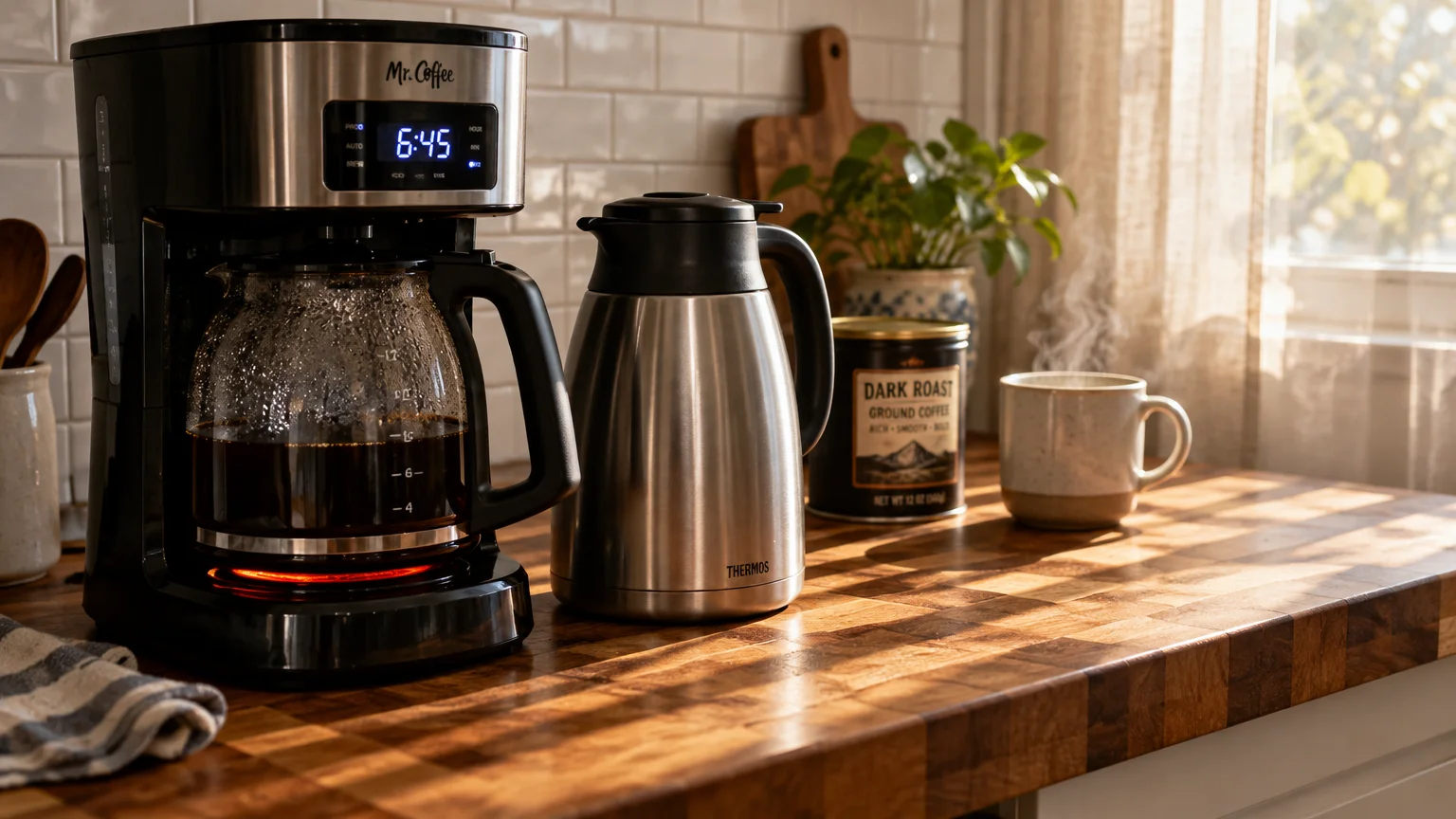
Traditional drip brewers present a different financial trap with their automated warming plates. Leaving a glass carafe resting on an active 800-watt warming plate for hours wastes significant power while scorching your coffee.
Additionally, modern coffee makers incorporate digital clocks, backlit displays, and capacitive touch sensors. These electronic components draw continuous standby power of 1 to 3 watts whenever the unit remains plugged in.
Mineral scale buildup inside water heating elements forces machines to work significantly harder. Calcium deposits act as an insulating blanket around the heating coil, trapping heat and increasing run times.
Descaling your coffee maker or electric kettle with plain white vinegar every few months restores thermal efficiency. Clean heating coils transfer thermal energy directly into the water without wasting electricity.
To fix this waste, switch from a glass carafe to an insulated stainless steel thermal carafe. A quality thermal carafe keeps coffee piping hot for hours using pure insulation rather than continuous electrical heat.
If your single-serve brewer features an energy-saving auto-off mode, activate it in the setup menu. This setting forces the internal water tank to cool down shortly after brewing finishes.
You can also plug your coffee station into an inexpensive mechanical outlet timer. Set the timer to energize the machine fifteen minutes before you wake up and shut off thirty minutes later.
For true frugality, pull the plug entirely once your morning beverage routine concludes. Cutting power at the outlet prevents the machine from drawing standby electricity for the remaining twenty-three hours of the day.
Tip #6: Configure Deep Sleep Modes on Entertainment Gear
Modern entertainment centers have evolved into complex clusters of high-performance microprocessors and wireless radios. Gaming consoles, soundbars, streaming pucks, and smart subwoofers occupy your living room outlets continuously.
Manufacturers frequently configure these devices out of the box to prioritize instant responsiveness over energy efficiency. Features like instant wake, voice activation, and background downloads keep internal components operating in high-power standby states.
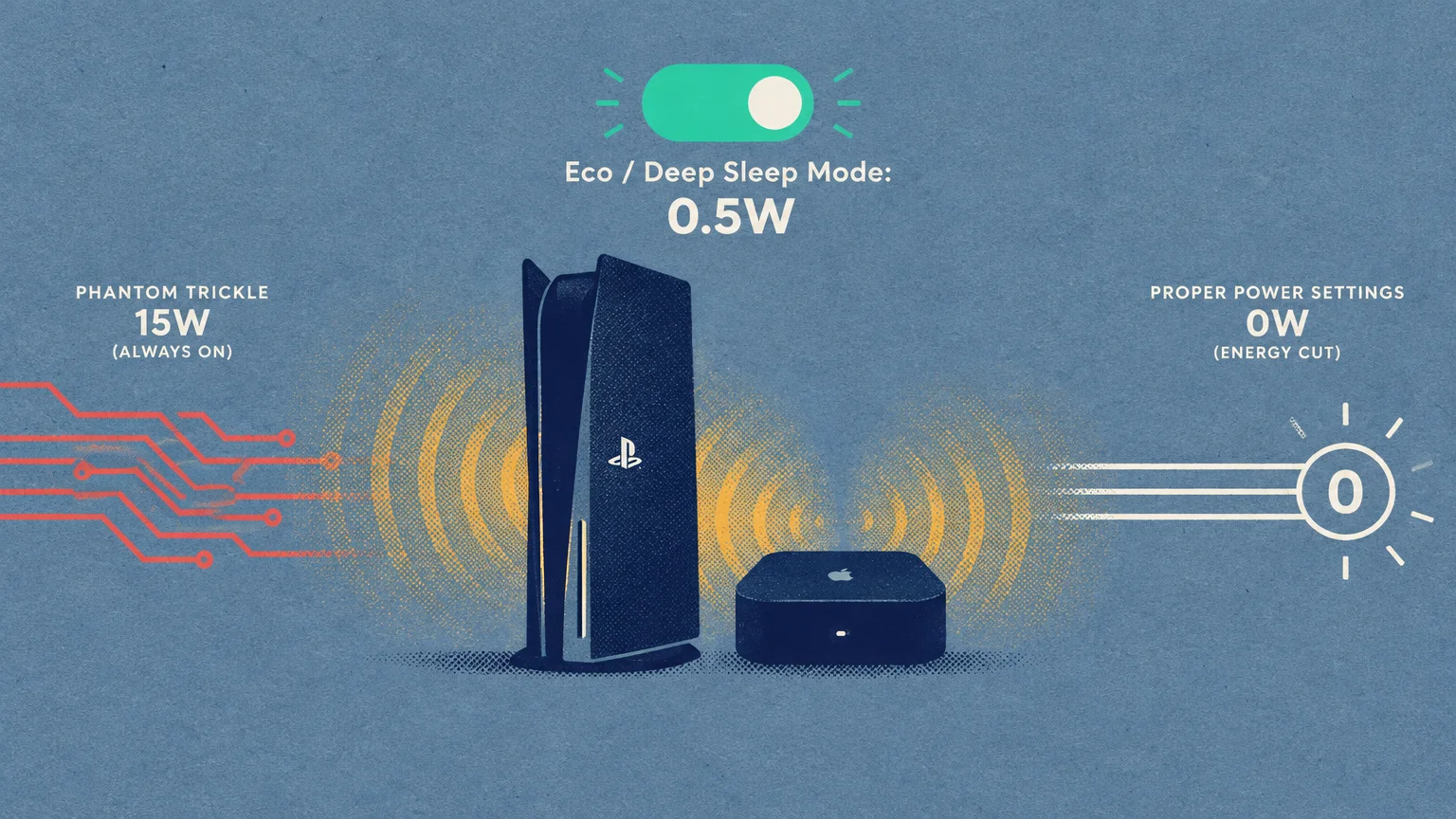
A gaming console operating in instant-on standby mode draws anywhere from 10 to 15 watts or more. By comparison, setting that same console into deep energy-saving sleep drops the standby draw down to under 1 watt.
Streaming sticks and audio receivers also consume 2 to 5 watts while awaiting a remote control signal. When stacked across multiple bedrooms and living spaces, entertainment standby power adds up substantially over twelve months.
Modern smart televisions also consume continuous power to keep their Wi-Fi radios and quick-start features active. Disabling the quick-start video option in your television settings cuts standby power significantly.
Smart speakers and voice assistants require continuous network connections, but grouping them strategically prevents unnecessary redundancy. Avoid placing voice-activated smart speakers in rooms where you rarely use them.
Dive into the settings menu of every console and streaming device connected to your televisions. Disable instant-on background modes and enable power-saving standby options that power down internal processors completely.
Set automatic sleep timers so your hardware shuts down after fifteen minutes of user inactivity. This setting prevents consoles and media players from running all night if you fall asleep watching movies.
If you use an external audio soundbar, check if it includes an automatic power-down feature. Most modern audio systems can sense when audio signals terminate and enter low-power sleep automatically.
These software adjustments take less than five minutes per device and preserve total convenience. You will never notice the three-second delay when waking a console, but you will notice the reduced power bill.
Tip #7: Master the Wattage Calculation Formula Before You Buy
Retailers and appliance manufacturers rely on consumer ignorance when marketing compact appliances. Taking control of your utility costs requires knowing exactly how much any device costs to operate before plugging it in.
Fortunately, the Department of Energy provides a standard formula to calculate operating expenses. Take the appliance wattage, multiply it by daily operating hours, and divide the result by 1,000 to determine daily kilowatt-hours.
Next, multiply that daily kilowatt-hour total by your local residential electricity rate. The current national average residential rate stands at 18.16 cents per kilowatt-hour, up 3.4% from 17.57 cents.
Consider a practical calculation for a 1,200-watt countertop appliance run for two hours each day. Multiplying 1,200 watts by two hours yields 2,400 watt-hours, which equals 2.4 kilowatt-hours per day.
Multiplying 2.4 kilowatt-hours by the national average rate of 18.16 cents reveals a cost of 43.6 cents daily. That equates to roughly $13.08 per month, or nearly $157 across a full year.
Compare this math against your regional utility rates to see your true financial commitment. While the full-year national average residential rate baseline was 17.23 cents per kilowatt-hour, your actual rate may differ.
You can locate an appliance’s electrical rating on the silver manufacturer label stamped on its base or power cord. Look for the rating listed in watts or convert volts and amps by multiplying them together.
For example, an appliance drawing 10 amps on a standard 120-volt line consumes 1,200 watts of active power. Converting these electrical specifications into dollars clarifies whether an appliance fits your household budget.
Do not guess at real-world electrical consumption based purely on manufacturer maximum nameplate ratings. Many appliances only pull their peak wattage during brief startup surges or high-intensity heating cycles.
Invest in an inexpensive plug-in electricity monitor, often called a Kill A Watt meter. Plugging appliances into this handheld diagnostic tool displays their real-time operating draw and continuous standby wattage instantly.
Armed with real wattage data, you can objectively decide whether an appliance earns its spot on your counter. Mathematical certainty always beats marketing claims when protecting your household budget.
Tip #8: Shift Small Appliance Run Times Away from Peak Rates
Many power utilities across the United States have moved residential customers onto time-of-use rate structures. Under these plans, the price you pay per kilowatt-hour shifts dramatically depending on the exact hour of the day.
Utility companies charge premium rates during peak demand windows, which typically occur between 4 PM and 9 PM on weekdays. During these high-demand hours, electricity prices can double or triple standard baseline rates.
A typical American household consumes roughly 863 to 900 kilowatt-hours per month. At standard national rates, that usage yields an average monthly electric bill of approximately $155 to $165.
Running high-wattage countertop appliances during expensive peak windows needlessly drives that total higher. Operating a 1,500-watt air fryer or countertop roaster during peak pricing multiplies your cooking expenses without improving meal quality.
Summer peak hours often differ from winter peak windows on time-of-use utility schedules. Summer peaks typically center on late afternoon air conditioning surges, while winter peaks spike during cold morning hours.
Adjusting your small appliance routine seasonally ensures you never run high-draw devices during the most punitive rate tiers. Check your utility company calendar twice each year to track seasonal shift dates.
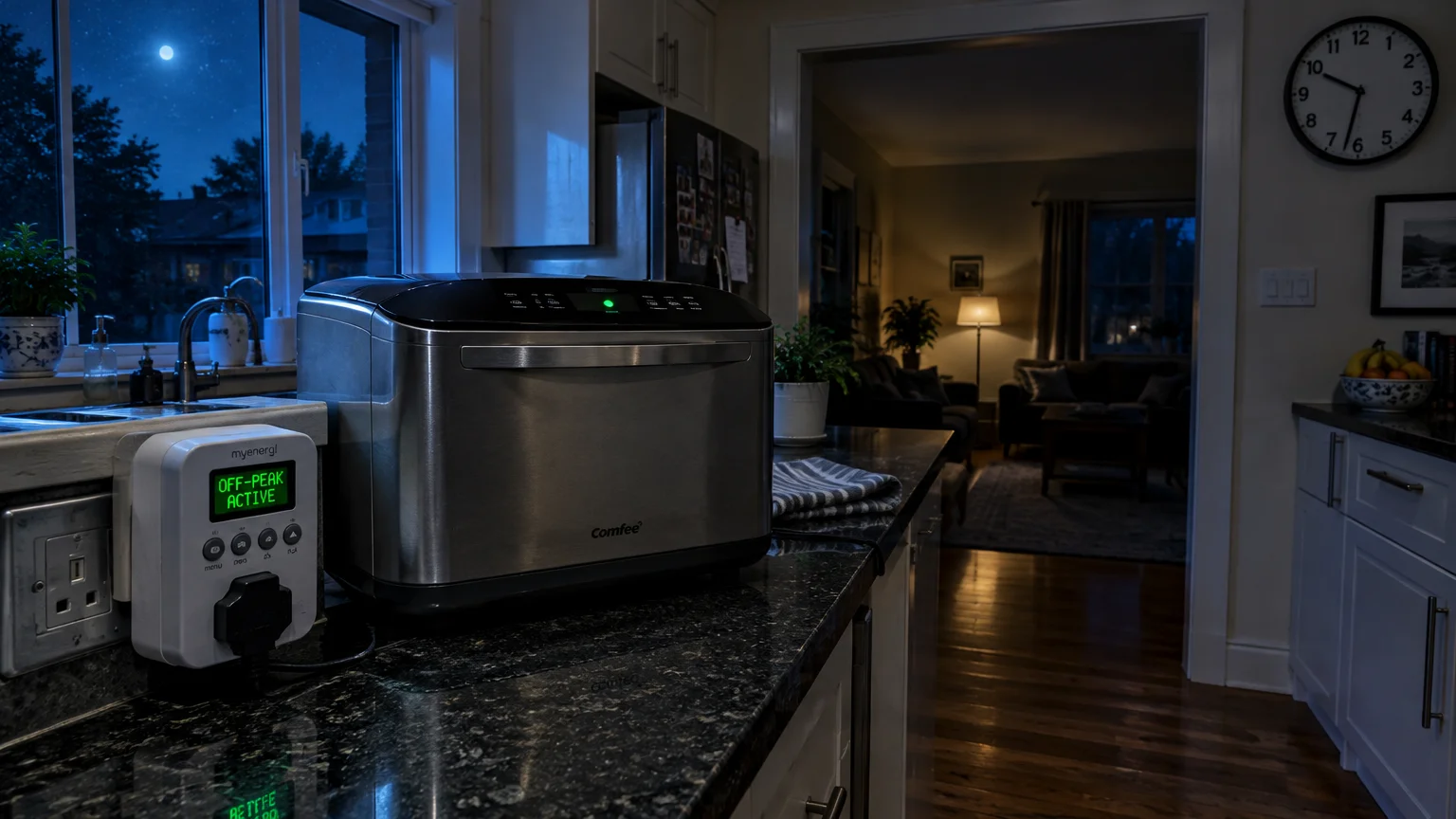
You can beat this utility pricing scheme by shifting energy-intensive small appliance tasks into off-peak hours. Run countertop dish sanitizers, slow cookers, and bread-making machines during morning hours or late in the evening.
Slow cookers provide an ideal weapon against peak time-of-use utility rates. A typical slow cooker draws only 150 to 250 watts over several hours, cooking dinner during cheap daytime off-peak windows.
Batch prep your weekly meals on weekend mornings when off-peak electricity rates remain low across most utility grids. Reheating pre-cooked food in a 1,000-watt microwave takes three minutes and draws minimal energy during peak evening hours.
Check your monthly utility statement or power company online portal to identify your exact peak hours. Aligning your countertop appliance habits with low-rate utility windows generates effortless monthly savings.
The Bottom Line: What This Means for Your Wallet
Small appliances offer undeniable convenience, but ignoring their cumulative power consumption quietly sabotages your financial goals. Compact gadgets create meaningful utility expenses through continuous standby power and high-wattage operating cycles.
The Department of Energy confirms that standby phantom power alone accounts for 5% to 10% of total residential electricity consumption. Eliminating that invisible load returns between $100 and $200 directly to your pocket every year.
When you combine phantom load reduction with smart space heater management, the financial payoff multiplies. Cutting out a single continuously running space heater saves an additional $65 every single month during cold seasons.
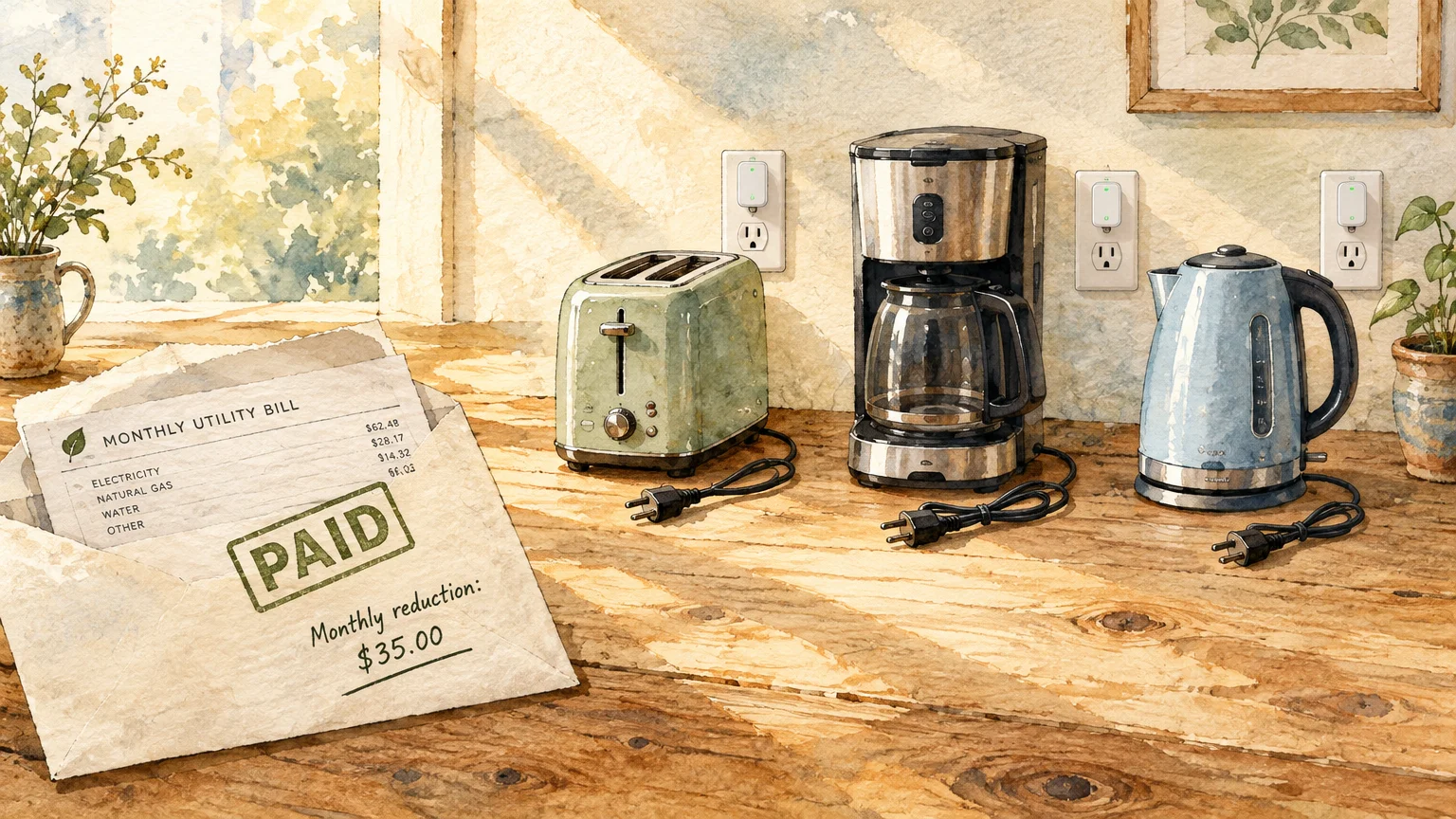
With the typical American household electric bill averaging $155 to $165 per month, these targeted adjustments create substantial relief. You can realistically lower your annual utility expenses by $200 to $400 without sacrificing personal comfort.
Protecting your budget does not require throwing away your favorite countertop appliances or living without modern electronics. It simply requires conscious operational discipline, strategic use of smart power strips, and basic wattage awareness.
Small changes compound rapidly when implemented consistently across every room. A household that eliminates phantom loads and moderates high-wattage heating devices builds lasting financial resilience.
Start by auditing your home today, focusing first on high-draw space heaters and entertainment gear. Unplug idle wall chargers, group countertop electronics on switched strips, and shift run times away from peak pricing.
Treat your home’s wall outlets as financial valves that you control directly. With minimal effort and zero loss of comfort, you can permanently reduce your monthly electric bills.
Every single kilowatt-hour you prevent from flowing into an unneeded appliance represents guaranteed tax-free money in your bank account. Take control of your wall outlets now and let your utility company absorb the loss.
Frequently Asked Questions
Does constantly unplugging small appliances wear out wall outlets or power cords?
Standard household electrical receptacles and appliance plugs are engineered to withstand thousands of insertion and removal cycles over decades of normal use. Casual daily unplugging will not damage heavy-duty wall outlets or durable cords.
However, if you want to avoid mechanical wear on older wall sockets, install switchable power strips instead. Flipping a switch cuts electricity cleanly at the outlet without requiring physical cord removal.
Do smart plugs consume more electricity than the phantom power they prevent?
Smart Wi-Fi plugs consume a very small amount of continuous electricity to maintain their internal wireless radio connection. Most quality smart plugs draw between 0.5 and 1.5 watts of standby power while operating.
If you use a smart plug to control a device that draws 10 to 15 watts in standby, you achieve a net reduction in energy use. For appliances drawing under 1 watt, however, a simple manual power switch remains far more cost-effective.
Which small countertop appliance draws the most electricity in an American home?
Portable electric space heaters draw the most continuous power of any small appliance, pulling 1,500 watts continuously on high settings. Kitchen appliances like air fryers and electric kettles pull similar wattages, but operate for significantly shorter durations.
Because total energy consumption equals wattage multiplied by run time, space heaters create vastly higher monthly utility costs. Running a space heater for hours easily eclipses the energy consumption of all countertop kitchen gadgets combined.
Can a Kill A Watt meter actually help me lower my monthly utility bill?
A plug-in electricity monitor does not directly reduce energy use on its own, but it provides crucial diagnostic data. By measuring real-time wattage and cumulative kilowatt-hour draw, it reveals which appliances actively waste your money.
Pinpointing your home’s worst energy offenders lets you target phantom loads and adjust usage habits with precision. That accurate diagnostic data pays for the cost of the measuring device within just a few billing cycles.
Does turning small appliances off and on repeatedly consume extra electricity?
This common myth originates from heavy industrial machinery and massive electric motors that draw large starting currents. For standard small household electronics and heating gadgets, no meaningful startup surge exists.
Turning off a small appliance always saves more electricity than leaving it running or idling in standby. Never hesitate to switch off a device to prevent wasted power.
For consumer protection information, visit the Federal Trade Commission (FTC) and the Consumer Financial Protection Bureau (CFPB). For product safety and reviews, consult Consumer Reports.
Disclaimer: This article is for informational purposes only and does not constitute financial advice. The content reflects the author’s opinion and research at the time of writing.
Always do your own research before making financial decisions.