U.S. candy prices have jumped more than 47% since 2020, while many domestic bars quietly shrink and swap cocoa butter for cheap oils. You can beat that inflation trap by targeting the best German chocolate bars still sold on American shelves.
Germany ships roughly 680,000 tons of chocolate each year under strict European cocoa rules that put U.S. standards to shame. Knowing which European chocolate brands deliver real value saves you from paying luxury markups for filler.
Here is what retailers hope you never notice in the candy aisle, along with the 12 German bars worth your grocery budget.
Shopping Trap #1: Overpaying for Domestic Bars Instead of Ritter Sport Whole Hazelnuts
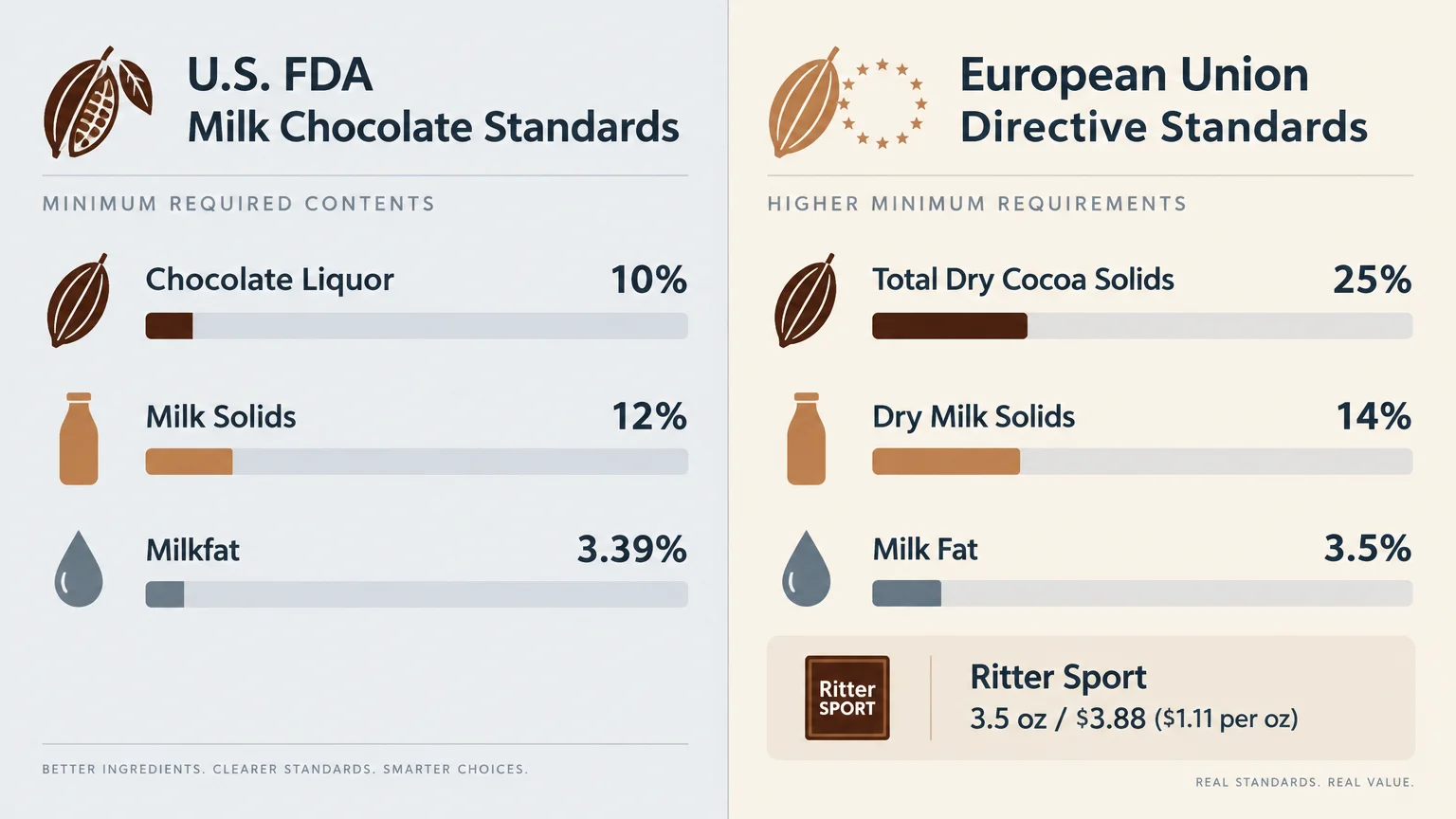
American candy aisles hide a massive quality gap behind nearly identical price tags. Under U.S. Food and Drug Administration rules, domestic milk chocolate only needs 10% chocolate liquor, 12% milk solids, and 3.39% milkfat.
German makers follow the European Union Cocoa and Chocolate Directive, which sets a far higher floor. European milk chocolate must contain at least 25% total dry cocoa solids, 14% dry milk solids, and 3.5% milk fat.
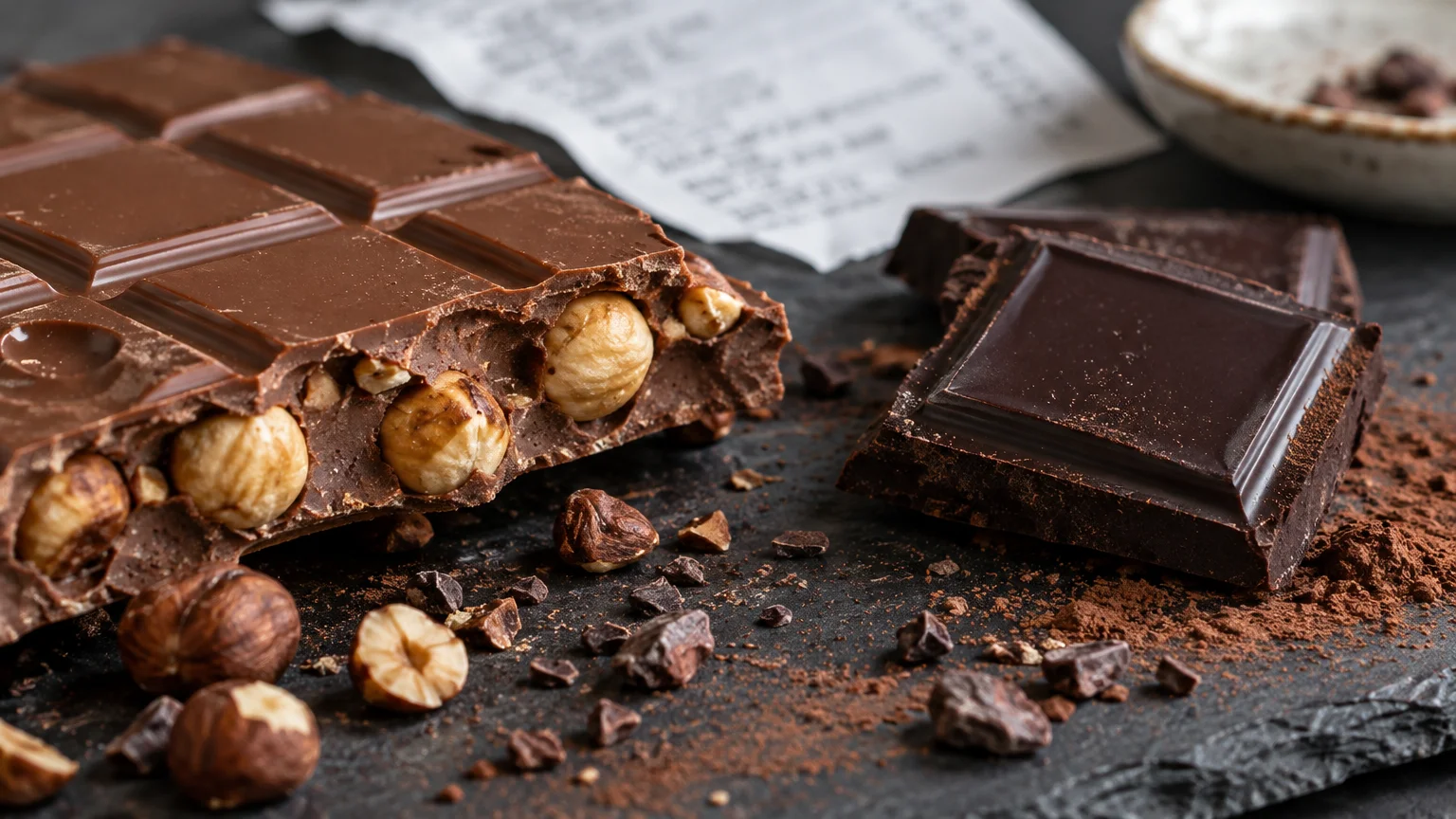
That regulatory gap makes Ritter Sport Whole Hazelnuts one of the smartest buys in the store. Founded in Stuttgart in 1912 and family-owned for over 110 years, Ritter Sport packs serious cocoa density into its iconic 3.5-ounce square.
At Walmart in 2026, a standard 3.5-ounce Ritter Sport bar retails for $3.88, or $1.11 per ounce. Watch out for checkout-lane impulse racks, though, because convenience stores often mark up single squares far above grocery pricing.
Instead of buying shrunken U.S. candy bars stuffed with cheap stabilizers, grab Whole Hazelnuts in the baking or international aisle. You get roasted nuts and real European cocoa standards at an everyday unit price.
Shopping Trap #2: Falling for Fake Cocoa Savings Instead of Ritter Sport 81% Dark Chocolate Ghana
High-cocoa dark chocolate took the brunt of recent commodity chaos, and brands used that turmoil to squeeze your wallet. After cocoa futures hit more than $11,000 to $13,000 per metric ton in December 2024, many makers shrank bars or diluted recipes.
Even after futures tumbled 65% to 75% to roughly $3,100 per metric ton in March 2026, shelf prices stayed sticky. FoodNavigator and Anges de Sucre report that hedging contracts, older high-cost inventory, and rising labor and packaging costs keep retail prices elevated.
Ritter Sport 81% Dark Chocolate Ghana sidesteps the dilution game because EU plain chocolate rules demand at least 35% dry cocoa solids and 18% cocoa butter. This single-origin bar delivers intense cocoa content without pushing you into $7 boutique pricing.
Check the unit price on the shelf tag before assuming a slim artisan sleeve is a better deal. Many specialty dark bars weigh only 2.5 to 3 ounces, whereas Ritter Sport gives you a full 100 grams for $3.88.
If you want variety without blowing your budget, check the 4.7-ounce Ritter Sport Minis Mix at $4.43, or 94.3 cents per ounce. Buying the multi-piece format actually drops your per-ounce cost below the standard bar.
Shopping Trap #3: Paying Bakery Markups Instead of Ritter Sport Marzipan
Specialty gift shops love slapping holiday markups on marzipan treats because American shoppers rarely know what almond paste costs to produce. You can skip the boutique gift box tax by reaching for Ritter Sport Marzipan instead.
This square pairs bittersweet dark chocolate with rich almond filling across the same 100-gram footprint as the rest of the 20-plus flavor lineup. You get a classic German confection for under $4 rather than paying $12 at a seasonal market.
Stores also play placement tricks with imported sweets by tucking them into high-margin endcaps near seasonal displays. Walk past those promotional bins and compare prices in the main candy aisle or ethnic foods section.
Remember that U.S. candy prices jumped 3.7% in February 2026 alone after climbing nearly 10% year-over-year through September 2025. When prices spike across the store, high-fat nut and almond fillings offer more satiety per dollar than sugar-heavy bars.
Always check the weight printed on the back seam before dropping bars into your cart. A full 3.5-ounce Ritter Sport bar stretches across multiple servings because the rich marzipan center stops mindless snacking.
Shopping Trap #4: Buying Sugar-Bombs Instead of Ritter Sport Salted Caramel
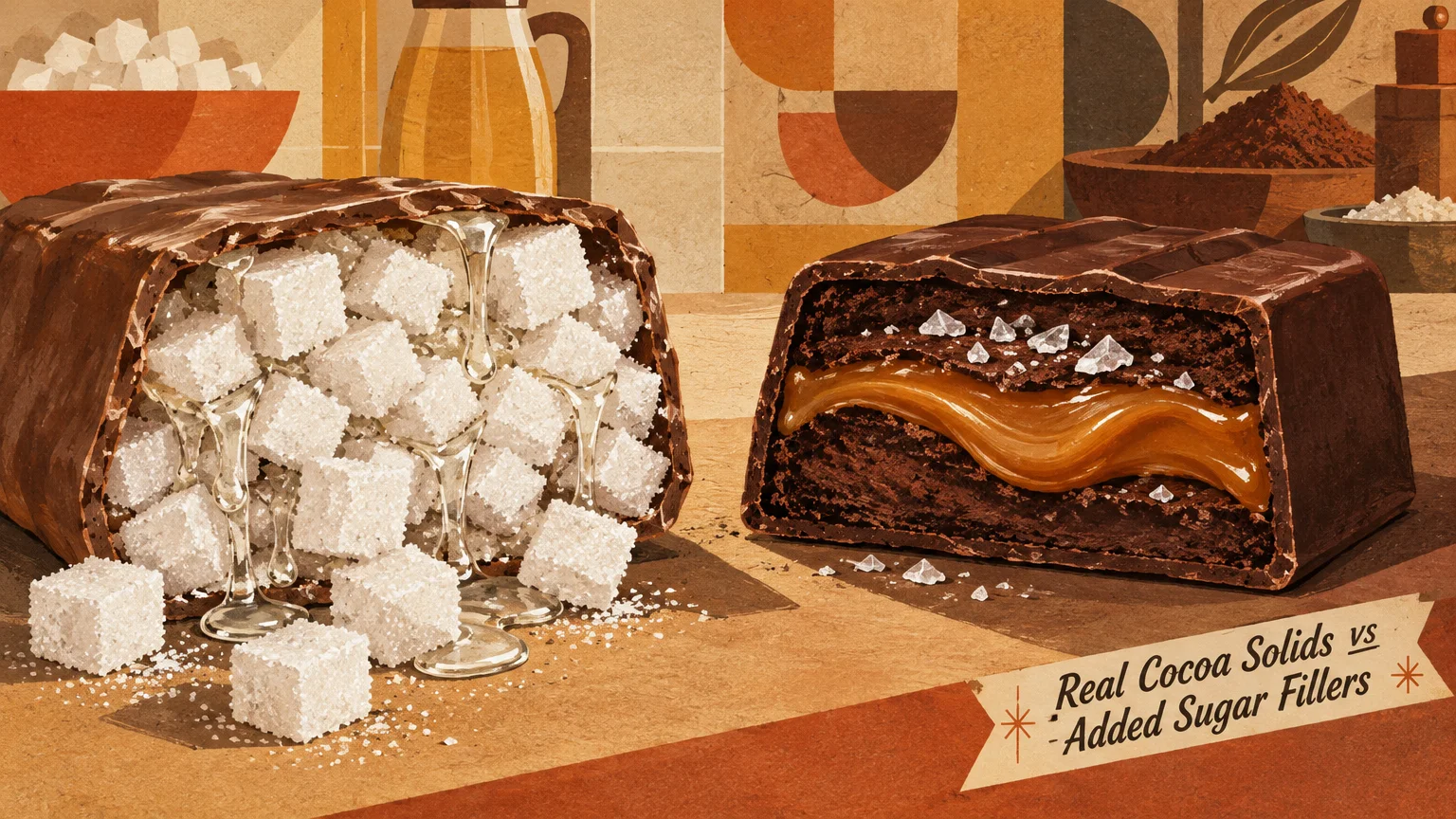
When cocoa costs soared, manufacturers responded by stuffing bars with cheap corn syrup and artificial caramel flavorings. Watchdogs like the Sierra Club noted in February 2026 that some reformulated U.S. sweets had to adopt chocolate-flavored labels instead of real chocolate.
Ritter Sport Salted Caramel remains an easy upgrade when you crave sweet-and-salty crunch without mystery coatings. It wraps buttery caramel crisp inside legitimate European milk chocolate regulated for higher cocoa solids.
Watch out for online convenience traps when hunting down harder-to-find flavors like Salted Caramel. Third-party marketplace listings frequently bundle single bars with inflated shipping fees that quietly double your real cost per ounce.
Before clicking checkout, factor in U.S. import costs that retailers already bake into shelf tags. Between April 2025 and February 2026, the German Economic Institute calculated an average effective bilateral U.S. tariff rate of 7.8% on EU imports.
Aluminum foil tariffs of 80% to 108% reported by Gemcorp Capital have also squeezed packaging budgets. Buying locally in brick-and-mortar grocery aisles lets you dodge duplicate shipping surcharges on top of those built-in import fees.
Shopping Trap #5: Buying Single Milka Bars Instead of Multi-Packs and MMMAX Sizes
Milka chocolate is one of the most recognizable European chocolate brands in America, yet most shoppers buy it the most expensive way possible. Created in Switzerland in 1901 and produced in Lörrach, Germany since that same year, Milka now belongs to Mondelēz International.
Shoppers often grab a single 100-gram bar—3.52 ounces—from an import shelf or click a lone listing online. On Walmart.com in 2026, third-party sellers list single Milka bars starting around $3.49 plus shipping, which wrecks your budget.
Smart deal hunters switch straight to bulk multi-packs to slash the per-bar cost. A 6-pack on Walmart.com drops to $21.55, or roughly $3.59 per bar, while a 10-pack falls to $26.10, or just $2.61 per bar.
You can also look for Milka MMMAX bars, which scale the classic recipe up to 300 grams—a hefty 10.58 ounces. Larger formats dilute the cost of wrappers and foil at a time when packaging inflation hits every food category.
Always calculate the delivered price including shipping before celebrating a low base price online. Checking the 10-pack unit rate guarantees you never pay convenience-store money for everyday Alpine milk chocolate.
Shopping Trap #6: Getting Scalped Online for Aldi’s Moser Roth Exclusive
Online resellers count on shoppers not knowing which German chocolate brands belong exclusively to discount grocers. Moser Roth—founded in Stuttgart in 1841 and acquired by German confectioner Storck in the 1960s—has been made exclusively for Aldi since 2007.
Each 4.4-ounce pack gives you 125 grams split into five individually wrapped bars made with Rainforest Alliance or Fairtrade cocoa. Even better, Moser Roth uses pure cocoa butter with zero vegetable fat substitutes, beating even the 5% vegetable-fat allowance under EU rules.
Here is the trap that burns uninformed buyers on major retail websites. Third-party resellers on Walmart.com list 6-packs of Moser Roth for $34.99 to $35.99, pushing the price to roughly $5.83 to $6.00 per pack.
That markup is pure reseller profit banked on brand secrecy. Walking into an actual Aldi store gets you the exact same 4.4-ounce German chocolate pack at everyday budget pricing.
Never buy store-exclusive private labels from marketplace middlemen without checking Aldi first. Keeping those five wrapped mini-bars in your pantry also builds in portion control that helps one pack last all week.
Shopping Trap #7: Assuming Every Aldi Choceur Bar Comes From Germany
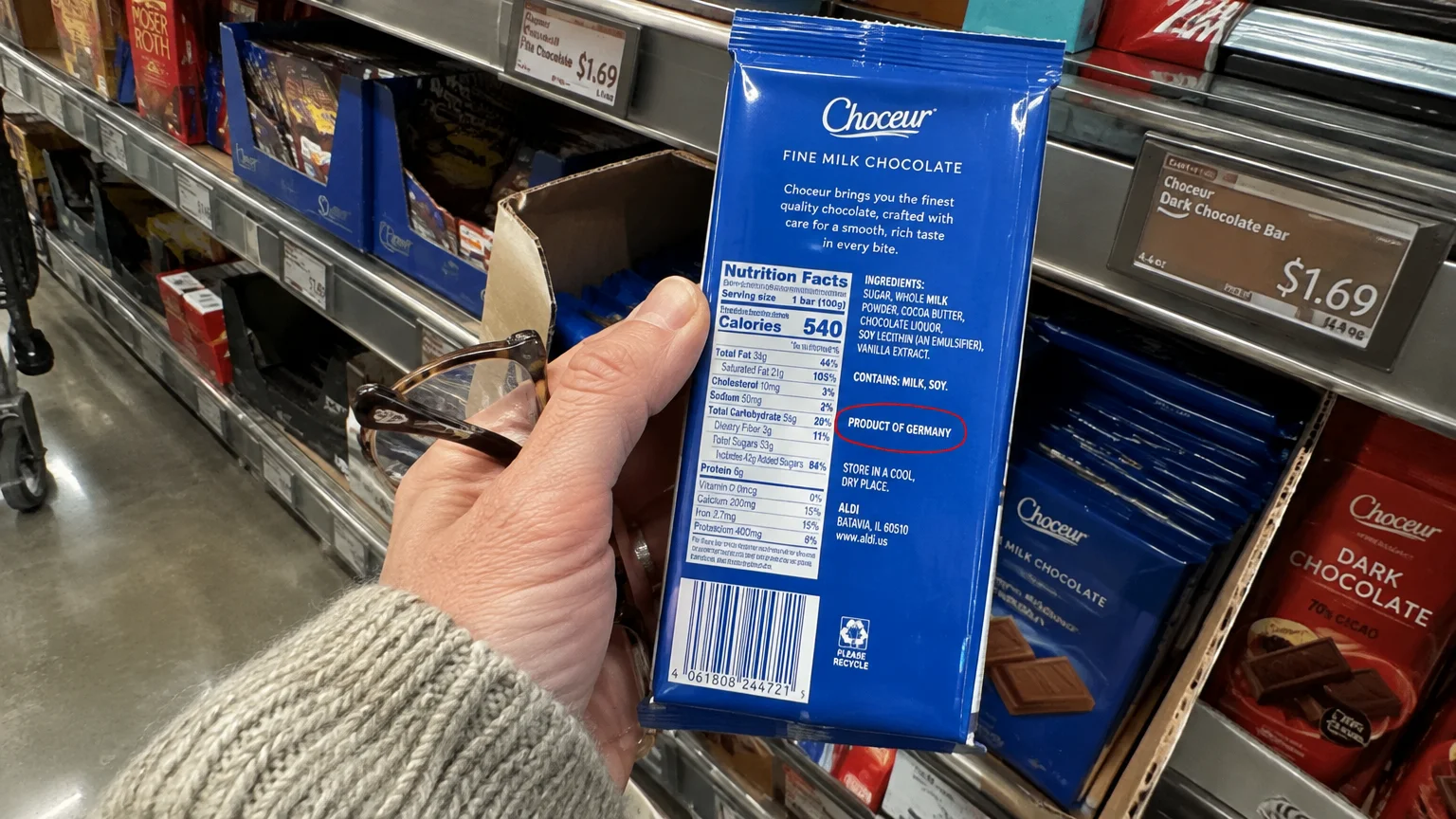
Aldi shoppers love hunting down store-brand dupes, and Choceur Milk Chocolate Bar has earned buzz as a $1.99 stand-in for Ritter Sport. That price beats standard $3.88 imported name brands by nearly half.
There is a labeling catch retailers do not advertise on shelf signs, though. While Parade reported in February 2026 that most Aldi bars are made in Germany, some Choceur varieties come from Belgium or Austria, and Daily Meal notes the Fairtrade brand’s Belgian roots.
If your goal is specifically buying German-made chocolate, do not rely on front-of-pack branding or store-brand reputation. Flip every individual SKU over and inspect the fine print for Product of Germany.
Choceur entered U.S. Aldi stores in 2012 and still offers strong Fairtrade value regardless of which European factory poured the mold. Checking the back label simply keeps you in control of what you are actually buying.
Watch out for seasonal display swaps too, because discount grocers rotate flavors quickly. Stock up when your favorite German-labeled SKU appears at $1.99 rather than waiting for a second trip.
Shopping Trap #8: Paying Full Retail for Schogetten Instead of Tracking Store Deals
Schogetten solves a classic chocolate-bar annoyance by molding each bar into neat bite-sized squares inside a foil-lined tray. Founded in Germany in 1962—and expanded with a vegan line in 2022—the brand sits on shelves at Aldi and Cost Plus World Market.
Specialty chains know shoppers treat pre-portioned European treats as impulse gifts, so full shelf prices creep upward fast. Paying full sticker price for a single bar means leaving easy savings behind.
Deal trackers in 2026 spotted Schogetten 4-packs marked down to $8.79, cutting your cost to roughly $2.20 per bar.
Time your purchases around World Market member promotions and Aldi seasonal drops instead of buying single bars mid-week. Because Schogetten squares are already separated, you can portion out two pieces without snapping uneven shards off a messy slab.
Inspect the expiration date on clearance four-packs before loading your basket. Chocolate holds its flavor and snap best when stored at 59 to 64 degrees Fahrenheit, so avoid faded packages sitting near sunny store windows.
Shopping Trap #9: Overspending on Gift Boxes Instead of Buying Merci Strategically
Greeting-card shops and airport kiosks charge absurd markups for boxed assortments because they sell convenience rather than chocolate quality. You can bypass those tourist traps by targeting Merci, a German favorite produced by Storck and sold at World Market and major U.S. retailers.
Merci packs slim, individually wrapped chocolate sticks in multiple classic fillings inside flat gift-ready sleeves. You get legitimate German production without paying $20 for mostly cardboard dividers and plastic trays.
Stores still play pricing games with giftable formats around Valentine’s Day, Mother’s Day, and December holidays. Retailers raise base prices right before printing flashy buy-one-get-one tags.
Track the per-ounce price on Merci boxes during off-peak months and stash unopened boxes in a cool dark cupboard. Because cocoa supply remains tight—the International Cocoa Organization estimated only a 37,000-tonne global surplus for 2024/25—holiday gift pricing is rarely forgiving.
Buying Merci at everyday grocery or World Market promo pricing gives you ready-to-gift German chocolate for a fraction of florist-shop add-on prices.

Shopping Trap #10: Confusing Premium Legacy With High Price Tags on Hachez
Many shoppers assume heritage European labels automatically mean triple-digit luxury pricing, so they stick to mediocre domestic bars by default. Hachez—founded in Bremen back in 1890—proves that over 130 years of German chocolate-making can still sit within reach.
You will spot Hachez in specialty grocery chains and German-food importers across the United States. The brand focuses on slow-conched bars and classic thin leaves that deliver smooth melt without waxy aftertastes.
Here is the trap when shopping heritage imports online: warm-weather shipping damage ruins what you paid extra to enjoy. German-food importers warn U.S. buyers to avoid standard mail shipping during hot months and rely on insulated mailers with ice packs from May through September.
Paying $15 for insulated summer shipping wipes out every smart-shopper saving you earned. Instead, buy Hachez locally in air-conditioned brick-and-mortar aisles or stock up online during cooler autumn and winter months.
Compare cocoa percentages across the Hachez shelf before picking a bar, because dark varieties frequently cost the same as milk versions despite packing far more real cocoa solids.
Shopping Trap #11: Overlooking Historic Budget Gems Like Sarotti
Flashy foil graphics and celebrity collaborations trick U.S. shoppers into ignoring older brands that quietly hold down the value shelf. Sarotti, founded in Berlin in 1852, has outlasted countless flashy candy trends by focusing on reliable German chocolate bars.
Look for Sarotti in international grocery markets, World Market aisles, and online European grocers. Because the brand relies less on heavy U.S. television ad spending, you are not paying a marketing surcharge inside every wrapper.
Keep a close eye on unit weights when comparing Sarotti against newer U.S. craft bars. Shrinkflation has turned many American bars into 2-ounce or 2.5-ounce offerings while keeping the outer cardboard sleeve deceptively tall.
Global chocolate economics explain why sneaky downsizing keeps spreading across supermarket shelves. J.P.
Morgan Global Research projects cocoa prices will stay structurally higher for longer near $6,000 per tonne, keeping pressure on manufacturers.
Choosing honest 100-gram bars from legacy German names like Sarotti protects your wallet from paying full price for shrinking domestic portions.
Shopping Trap #12: Skipping Specialty Nut and Marzipan Leaders Like Niederegger and Viba
Standard candy aisles condition Americans to expect cheap peanut butter cups or synthetic nougat chews when they crave filled chocolate. Two specialized German chocolate brands sold through U.S. importers and specialty stores—Niederegger and Viba—expose just how watered-down those fillers are.
Niederegger specializes in rich chocolate-coated marzipan, while Viba brings traditional Thuringian hazelnut nougat bars to American shelves. Both lean heavily on real almond and roasted hazelnut pastes rather than palm oil and sugar water.
Watch out for reseller bundling tricks when ordering niche regional bars online. Third-party sellers love creating vague mystery assortments that pad cheap filler candies alongside one or two premium Niederegger or Viba bars.
Always buy single-brand packs with clear gram weights listed in the product title. Also remember that global cocoa volatility—swinging from $3,100 in March 2026 back to $6,771 in August and $5,100 in early November 2026—pushes importers to adjust prices abruptly.
When you catch Niederegger or Viba on winter clearance after holiday seasons, buy an extra bar or two and keep them cool at 59 to 64 degrees Fahrenheit.
Your Action Plan: How to Be a Smarter Shopper
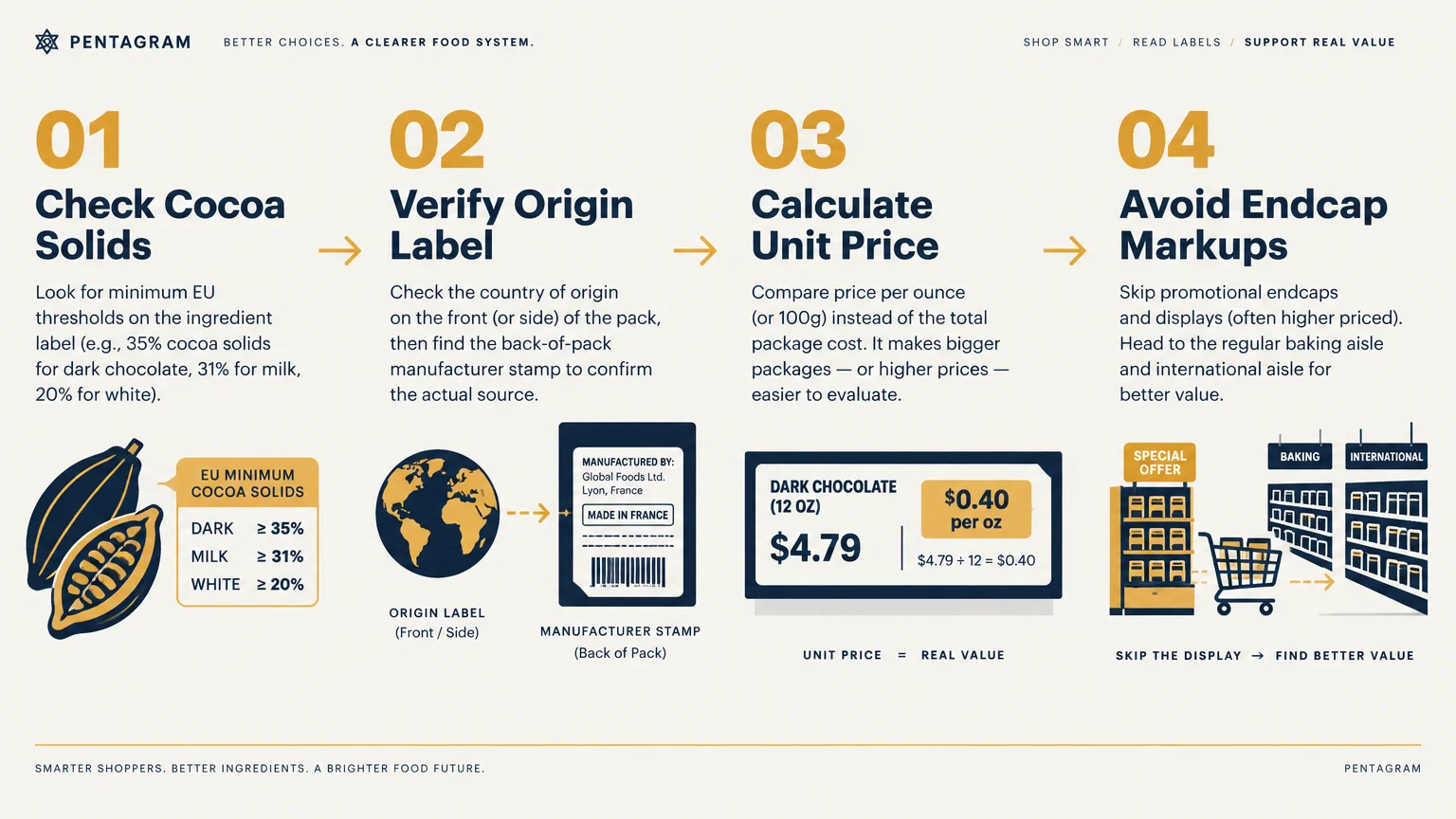
Stop buying chocolate on autopilot at checkout lanes where markups hit their peak. Walk straight to the international aisle, Aldi, or Cost Plus World Market to compare true 100-gram German chocolate bars against shrunken U.S. competitors.
Check two things on every wrapper before it enters your cart: net weight in grams or ounces and the country-of-origin line. Confirming Product of Germany ensures your bar meets strict European cocoa and milkfat rules rather than weak domestic minimums.
Time your purchases around the calendar to avoid hidden surcharges. Buy online multi-packs—like 10-packs of Milka or seasonal Schogetten 4-packs—between October and April so you never pay May-through-September ice-pack shipping fees.
Skip third-party resellers charging $5.83 or more per pack for Aldi exclusives like Moser Roth. Pair in-store discount runs with unit-price math, and remember that U.S. tariff shifts—including the 15% EU framework cap and 2026 global tariff moves—make smart bulk buying pay off fast.
To check for scams and false advertising, visit the FTC. For unbiased product reviews, consult Consumer Reports.
Business ratings are available at the Better Business Bureau.
Frequently Asked Questions
Why do German chocolate bars taste richer than standard U.S. candy bars?
European Union Directive 2000/36/EC requires milk chocolate to hold at least 25% dry cocoa solids and 14% dry milk solids, while U.S. FDA rules allow just 10% chocolate liquor. Brands like Moser Roth also use pure cocoa butter instead of cheap vegetable-fat substitutes.
Are Aldi’s Choceur and Moser Roth bars really made in Germany?
Moser Roth is produced exclusively for Aldi by German confectioner Storck using pure cocoa butter. Choceur bars at Aldi are mostly made in Germany, though some varieties come from Belgium or Austria, so always check the back label for Product of Germany.
When is the cheapest time to order German chocolate bars online?
Order between October and April when cool weather eliminates the May-through-September insulated-mailer and ice-pack surcharges used by German-food importers. Look for multi-packs—such as 10-packs of Milka or 4-packs of Schogetten—to lower your delivered per-bar cost.
Why haven’t chocolate shelf prices dropped back to 2020 levels?
U.S. candy prices remain more than 47% higher than in 2020 due to cocoa futures volatility, older high-cost hedging contracts, and rising labor and packaging costs. U.S. import tariffs—including steep duties on aluminum foil—also keep retail shelf tags elevated.
Disclaimer: The opinions in this article are for informational and entertainment purposes. Brands, products, and store policies can change.
Always verify information and prices before making a purchase.