Tip #1: Habitat for Humanity ReStore
Best for Furniture, Large Appliances, and Building Materials
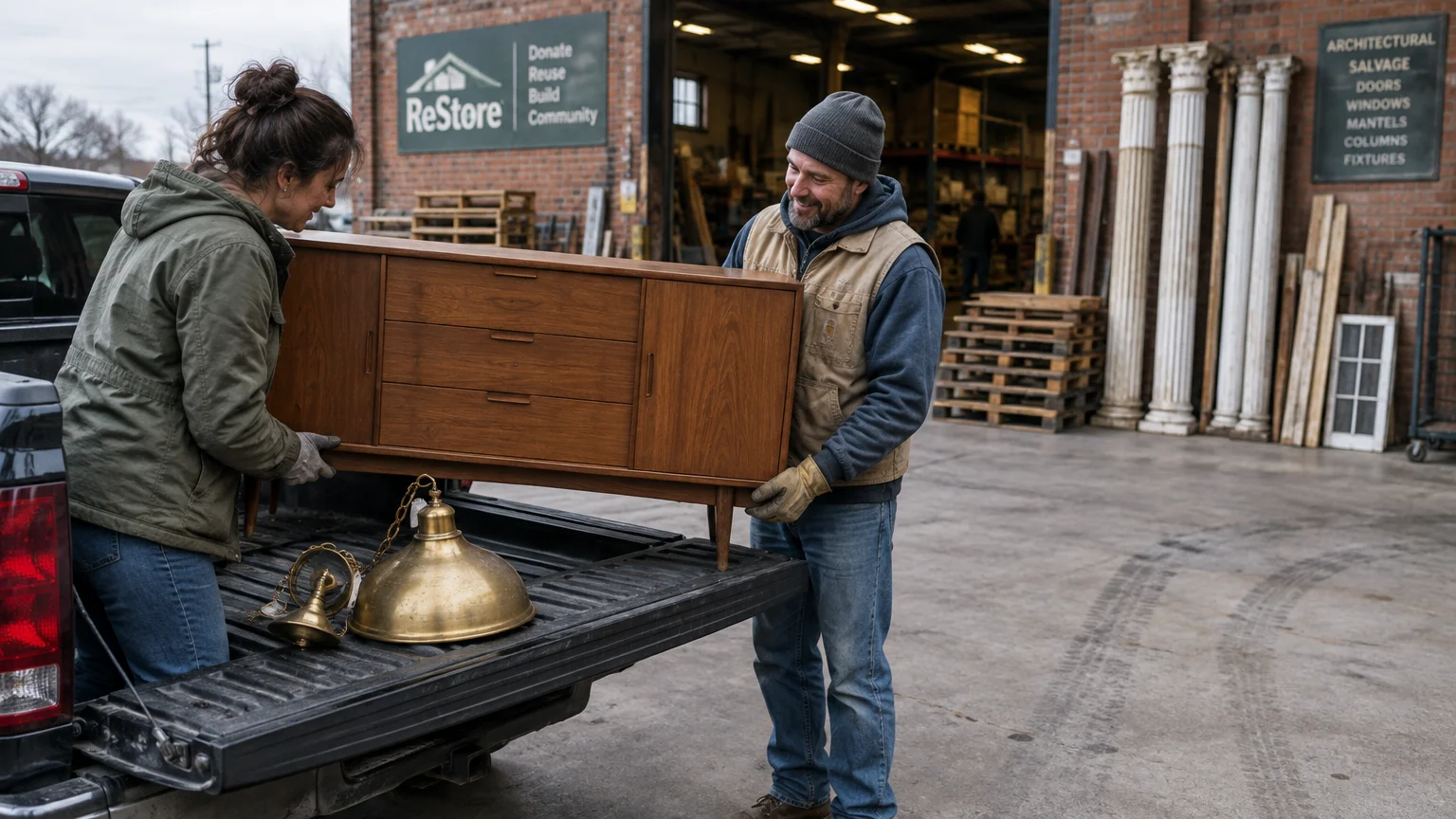
Habitat for Humanity ReStore ranks among the premier donation drop-off locations for home improvement materials, architectural salvage, and oversized furniture. These independently operated retail centers sell donated merchandise to fund local homebuilding initiatives.
Commercial junk removal services routinely charge between $150 and $450 to cart away heavy items like sofas, refrigerators, and kitchen cabinets. ReStore frequently offers complimentary scheduled pickups for large items, instantly saving you hundreds of dollars in disposal fees.
They accept functional appliances, solid wood furniture, lighting fixtures, unopened hardware, and surplus construction supplies. However, they categorically reject broken glass, toxic chemicals, rusted tools, and appliances with significant mechanical defects.
Under federal regulations, the Internal Revenue Service requires all donated goods to be in good used condition or better under Internal Revenue Code Section 170(f)(16). Donating broken junk will not earn you a legitimate tax deduction and burdens nonprofit staff.
Before you load your vehicle, always call your local ReStore or upload photos to their intake portal. Their inventory requirements fluctuate based on seasonal showroom floor space and current warehouse capacity.
Smart homeowners schedule donations right after remodeling projects to maximize convenience and claim substantial non-cash deductions. Dropping off leftover tile boxes, unopened plumbing fixtures, and functional vanities keeps valuable materials out of the dump.
Always verify the organization’s active tax-exempt status using the IRS Tax Exempt Organization Search tool before claiming any write-off. Obtaining an itemized receipt at the drop-off dock safeguards your tax return against administrative disputes.
Keep detailed digital photographs of every major home item you donate before handing it over to store staff. Visual documentation serves as vital substantiation if tax authorities ever question your non-cash charitable valuations.