The Bottom Line: What This Means for Your Wallet
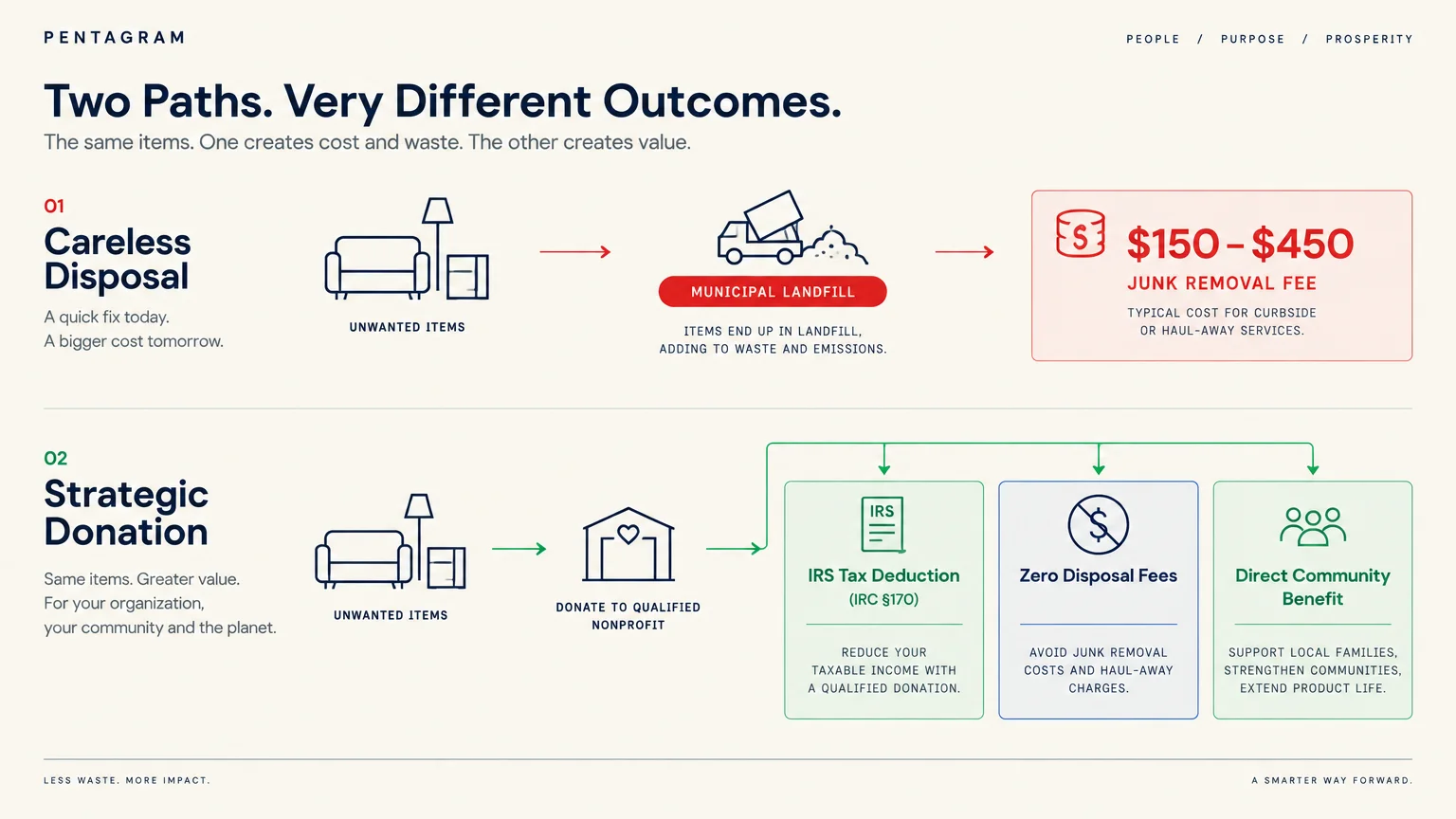
Decluttering your living space is not merely an exercise in personal organization; it is an active financial strategy. Matching your unwanted items with the right organizations protects your time, eliminates waste hauling fees, and maximizes potential tax deductions.
Do not assume every donation automatically reduces your federal tax bill. With the standard deduction remaining near historic highs, itemizing deductions only benefits households with substantial qualified mortgage interest, state taxes, and non-cash gifts.
If you do itemize, strict compliance protects you from penalties. Follow IRS guidelines by photographing donated goods, retaining contemporaneous receipts, and filing Form 8283 whenever your non-cash deductions cross the $500 mark.
When tax write-offs do not make mathematical sense, prioritize hyperlocal peer gifting to bypass expensive landfill dump fees. That simple shift saves you hard cash immediately while keeping perfectly good goods in circulation.
Every item you remove from your home creates breathing room in your living environment and simplifies your daily routines. Approach donation with intention, document your contributions meticulously, and put your excess belongings to work for your community.
For consumer protection information, visit the Federal Trade Commission (FTC) and the Consumer Financial Protection Bureau (CFPB). For product safety and reviews, consult Consumer Reports.
Disclaimer: This article is for informational purposes only and does not constitute financial advice. The content reflects the author’s opinion and research at the time of writing.
Always do your own research before making financial decisions.